Cancún Whale Shark Tour Guide: How to Swim with Whale Sharks [2026]
Everything you need to plan a private whale shark tour from Cancún — season dates, CONANP regulations, private vs. shared tour comparison, and 2026 pricing.
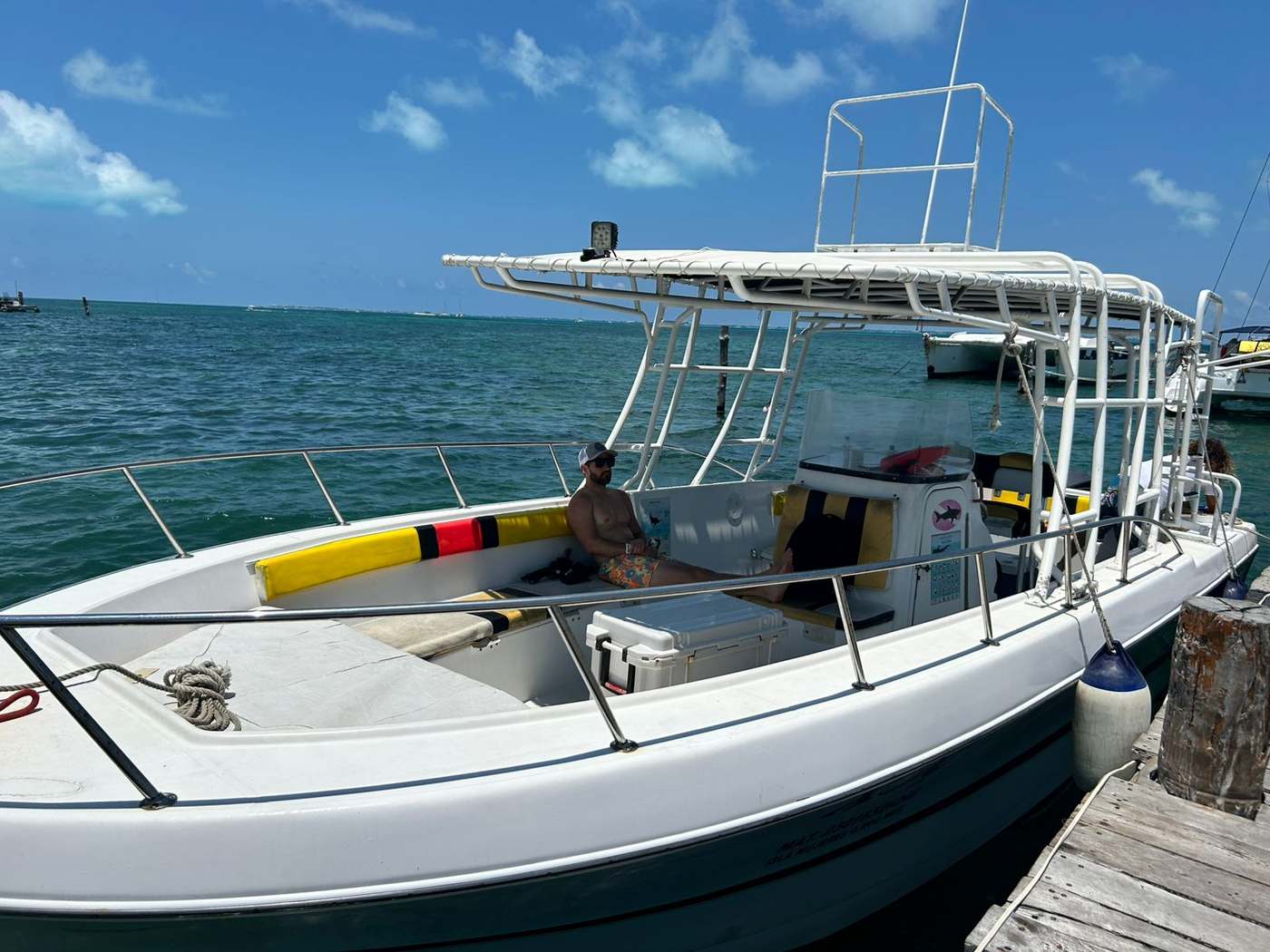
Every summer, the waters off the Yucatán Peninsula host one of the most extraordinary wildlife events on Earth: hundreds of whale sharks — the largest fish species alive — gathering in warm Caribbean surface water to feed. The aggregation zone is accessible in about 1 hour and 30 minutes by boat from Cancún. And unlike most bucket-list wildlife encounters, this one is regulated so carefully that the experience is both genuinely accessible and genuinely sustainable.
This guide covers everything you need to plan a private whale shark tour from Cancún in 2026: when to go, what the CONANP regulations actually mean for your day on the water, the real cost difference between private charters and shared group tours, and exactly what happens from the moment you board the boat until the sharks disappear under the surface. If you are reading this between May and September, the season is open right now.
Book this route: Whale shark tour from Cancún — $2,500 for the whole boat, up to 10 guests, season May to September. Captain, fuel and ice included.
Get a quote on WhatsAppWhy Cancún for Whale Sharks?
The waters off the Yucatán Peninsula host the largest known annual aggregation of whale sharks on Earth. Every summer, hundreds of individuals gather to feed on fish spawn in warm, plankton-rich Caribbean surface water. This is the only place in the world where swimming with whale sharks is this predictable and this well-managed at scale. Ready to book a private boat in Cancún?
Whale sharks are the largest fish species on Earth, reaching up to 12 meters (40 feet) and 20 tons. Despite their size, they are completely harmless to humans — they are filter feeders with no functional teeth, consuming plankton, fish eggs, and small fish at the surface. The CONANP whale shark program has been running since 2012 and is widely cited as one of the world’s most successful examples of sustainable wildlife tourism regulation.
Key facts before you book:
- Whale sharks are the largest fish species on Earth (up to 12m / 40ft, 20 tons)
- They are filter feeders — no danger to humans
- CONANP has regulated tours since 2012, making it one of the world’s best-managed wildlife tourism programs
- Nauty 360 tours depart from Marina Punta Norte, Puerto Juárez
- The season runs May through September only — tours outside the season are not permitted by law
Ready to book? See our private whale shark tour from Cancún page: $2,500 for the whole boat, up to 10 guests, season May to September.
When Is Whale Shark Season in Cancún?
The official CONANP season runs May through September, regulated by Mexican law, with exact opening and closing dates set annually. Tours outside the season are prohibited. The window is a regulatory decision — CONANP sets it as a species-protection measure, not because whale sharks are strictly absent outside it.
| Month | Availability | Notes |
|---|---|---|
| May | Open | Season opens in May — book early to lock in your date |
| June | Open | Confirm dates with us |
| July | Open | Confirm dates with us |
| August | Open | Confirm dates with us |
| September | Open | Season closes in September — confirm the final dates with us |
Sightings are never guaranteed and conditions change every day. Your captain gets that morning’s position report before leaving the dock.
One detail that most guides omit: the sharks are tracked informally by the captain network. Every morning before departure, captains exchange position reports via radio and WhatsApp groups, sharing the coordinates where the aggregation was spotted at dawn. Your captain will have that morning’s position before you leave the dock. The zone shifts day to day with currents and wind — which is why relying on a captain with local network connections matters more than any fixed GPS coordinate you might find online.
For context on how the whale shark season fits into the broader Cancún charter calendar, the best time to visit Cancún by boat activity covers all seasons month by month.
Private Charter vs. Group Tour for Whale Sharks
CONANP Rule: a maximum of 8 snorkelers in the water with whale sharks at any one time, regardless of tour type. This is the single most important fact for understanding the difference between a private charter and a shared group tour.
What this means in practice:
- On a shared group tour: you may be on a boat with 20–30 people, taking turns in the water in shifts. Your actual water time with the sharks may total 30–45 minutes, split across multiple rotation cycles. You enter on the operator’s schedule, not yours.
- On a private charter: the 8-person limit applies only to your group. You enter on your schedule, stay as long as the regulations allow per encounter, and rotate on your own terms without strangers sharing your water time.
| Factor | Shared Group Tour | Private Charter |
|---|---|---|
| People on boat | 8–30 strangers | Your group only |
| Water rotation | Group shifts, fixed schedule | Your group’s own pace |
| Departure time | Fixed by operator | Hotel pickup 6:00–7:00am; marina departure fixed at 7:00–7:30am |
| Bilingual guide | Not always included | Included |
| Route flexibility | None | Can add Isla Contoy or Isla Mujeres stop |
| Starting price | $120–$180 per person | From $2,500 total |
Note: the $2,500 private-charter price above is the full price — no add-ons.
The math works in favor of private charters for groups of 6 or more. At $2,500 for a full boat with 10 people, the per-person cost is approximately $250 — comparable to or less than a premium shared tour ticket, with the entire vessel exclusively yours. For groups of 4, the private charter costs $625 per person; still justifiable given the quality difference in water time and the absence of rotation queues.
What to Expect on a Cancún Whale Shark Tour
Hotel Pickup, Departure & Transit (6:00–7:30am)
Hotel pickup is 6:00–7:00am, with your boat's real departure from the marina at 7:00–7:30am. This isn't arbitrary — you need to reach the aggregation zone by 7:30–8am, before afternoon trade winds build surface chop. On calm mornings, the surface of the aggregation zone is nearly flat, making it easy to spot whale sharks from the surface as they feed. By early afternoon, wind chop makes spotting harder and snorkeling less comfortable. The early departure is one of the non-negotiable logistical realities of this tour.
Transit time from Cancún is approximately 1 hour and 30 minutes, though it can vary somewhat depending on conditions and the day’s shark location. Your captain checks the radio network before departure — multiple captains share real-time shark location updates every morning. You will know approximately where you are heading before you leave the dock.
In the Water with Whale Sharks
CONANP rules, enforced by your certified guide:
- Maximum 8 snorkelers per whale shark at any one time
- Stay at least 3 meters from the shark’s body; 4 meters from the tail
- No touching (ever — includes accidental contact)
- No flash photography
- No chemical sunscreen in the water (only reef-safe zinc-based, or no sunscreen — the CONANP guide enforces this before entry)
- No SCUBA diving — snorkel only in the aggregation zone
What you actually experience: whale sharks typically swim at 2–3 km/h at the surface while feeding. You swim alongside them for 10–15 minutes per encounter before the guide rotates the group or the shark dives. On a good morning, you may have 3–5 distinct encounters with different individual sharks. The sharks are enormous up close — most first-timers describe the moment the full length of the animal becomes visible underwater as unexpectedly overwhelming, in the best possible way.
After the Whale Sharks
Most private charters include a second stop after the whale shark zone. The most common options:
- Isla Contoy — a protected national park island with excellent reef snorkeling and a sea bird sanctuary. This is a genuinely different ecosystem from the open-water whale shark zone.
- Isla Mujeres — Caribbean beach, lunch at a waterfront restaurant, and optional gear-free relaxation before the return. See the Isla Mujeres by boat guide for what to do with an afternoon on the island.
Departure from the shark zone is typically by noon, putting you back at your hotel by approximately 2:00pm if you head straight back. Charters that add an island stop (Isla Contoy or Isla Mujeres) return to Cancún in the late afternoon instead.
Private Whale Shark Charter Prices in Cancún (2026)
Private whale shark charters in Cancún run a single option: a private speedboat for up to 10 people, from $2,500 — the full price, no add-ons. Includes round-trip marina transfer, boat, fuel, crew, CONANP-certified guide, bilingual captain, snorkel gear, drinks, and a light breakfast.
Per-person cost at the $2,500 base price:
| Group Size | Per Person |
|---|---|
| 4 people | $625 |
| 6 people | $417 |
| 8 people | $313 |
Note: these per-person figures are based on the full $2,500 price — there are no additional fees on top.
What is included in the charter price: round-trip marina transfer, boat, fuel, crew, CONANP-certified guide, bilingual captain, snorkel mask and life jacket, drinks, and a light breakfast. The CONANP tour permit is included in the charter price for all Nauty 360 Cancún bookings — you do not pay it separately. What is not included: personal spending at Isla Mujeres stops, crew gratuity (optional), and underwater camera rental if you need one beyond a personal GoPro.
For the full range of Cancún charter options across all trip types, the Cancún yacht charter guide covers vessel types and pricing in detail. For a complete overview of what you can do in the water near Cancún year-round, see the Cancún boat tours complete guide.
What to Bring (and What to Leave Behind)
Preparation for a whale shark tour differs from a standard Caribbean snorkel trip because you will be in open water for extended periods and CONANP prohibits most conventional sunscreens. Here is the practical packing list:
Bring:
- Rash guard — your primary UV protection in the water. Long-sleeved rashguards block 95%+ of UV and are far more practical than trying to keep sunscreen on in open Caribbean water
- Reef-safe zinc-based sunscreen — for before and after the water only; chemical sunscreen (oxybenzone, octinoxate) is prohibited in CONANP waters and will be confiscated by the guide
- Water shoes — useful for boarding from the beach or dock and for stops at Isla Contoy
- Dry bag — for phone, wallet, passport copy, and anything that should not get wet
- Motion sickness medication — take 1 hour before departure if you are susceptible; open-water conditions can be choppy on the transit
- Underwater camera or GoPro — strongly recommended; a whale shark 2 meters away does not photograph well with a phone held above water
- Cash (USD or MXN) — for optional purchases at island stops
Leave behind:
- Regular chemical sunscreen (will be confiscated at the aggregation zone)
- Heavy jewelry (guides prefer no reflective items near the water when close to the sharks)
- Anything irreplaceable — the boat deck gets wet
How to Book a Private Whale Shark Tour in Cancún
Booking a private whale shark charter follows the same process as any Cancún charter. Book at least 3–4 weeks in advance — do not wait until the week before your target date.
Step-by-step process:
- Determine your group size — the private speedboat accommodates up to 10 people
- Select your date — book 3–4 weeks ahead
- Confirm CONANP permit is included — ask for written confirmation; all Nauty 360 Cancún charters include it
- Confirm a bilingual guide is on board (required for communication during encounters)
- Get written confirmation with captain name and departure dock location
To book a private whale shark tour in Cancún, send a WhatsApp message with your date, group size, and whether you want to add an Isla Contoy or Isla Mujeres stop. Instant confirmation.
Private whale shark tours in Cancún from $2,500 — CONANP permit, bilingual captain, snorkel gear included. Book 3–4 weeks ahead. Season runs through September.
Chat on WhatsApp — Book Whale Shark TourWhat we see on every trip
- The trip our guests choose most: Isla Mujeres.
- Light breakfast and drinks are included.
- The captain's tip is optional.
Frequently Asked Questions
Related Guides