Boat Charter vs Boat Rental: What’s the Difference?
The terms are used interchangeably online, but they mean very different things. Here is the plain-language breakdown every first-time booker needs before they search.
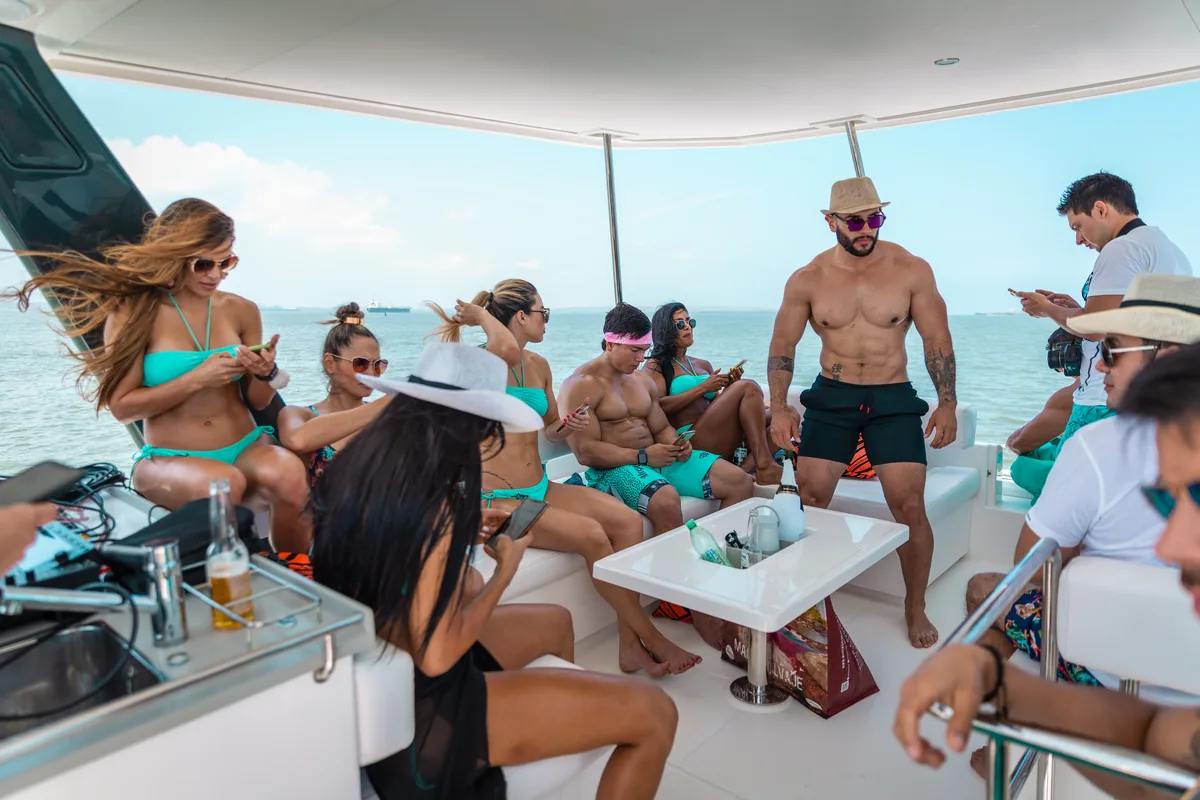
Open any search engine and type “boat rental Cartagena” or “rent a yacht Miami” and you will get results for dozens of companies, all using the words “charter” and “rental” interchangeably. This is not an accident — it reflects how everyday language has drifted from the technical marine industry definitions. But the underlying products are genuinely different, and knowing the distinction before you book will prevent confusion, mismatched expectations, and — in some markets — an awkward conversation about whether you actually hold a valid boating license.
This guide explains exactly what each term means, who each option suits, what the real price difference looks like when you account for all variables, and why the vast majority of tourists in Caribbean and coastal US markets end up choosing a private boat charter whether or not they call it that when they search.
What Is a Boat Rental?
A boat rental — formally called a bareboat rental in the marine industry — means you rent the vessel itself, without a captain or crew. You are responsible for operating the boat, navigating the route, managing anchoring, and handling any safety situations that arise. You are the operator of record.
In practice, this model is most common in:
- Calm inland lakes and rivers (Lake Havasu, Lake Tahoe, Florida lakes, the Boundary Waters)
- Small watercraft — kayaks, paddleboats, jet skis
- Marinas with a quick skills-check process for certified boaters who want a vessel for a few hours without a full charter package
To rent a boat without a captain in most US coastal states and Caribbean countries, you need a recognized boating license or demonstrated experience. In some jurisdictions, the rental company is legally required to conduct a skills assessment before handing over the wheel. Florida, for example, requires anyone born after January 1, 1988 to hold a Florida Boating Safety Education ID card to legally operate a motorized vessel. The liability for the vessel’s operation stays entirely with you as the operator the moment you leave the dock.
What a typical bareboat rental includes:
- The vessel (fueled or you pay for fuel separately)
- Life jackets and basic required safety equipment
- A briefing on the boat’s controls and instruments
- A route suggestion or map (not a guide, not navigation assistance)
What a bareboat rental does not include:
- A captain or any crew whatsoever
- Local knowledge of currents, hazards, reef locations, or anchorage rules
- Anyone responsible if you run aground, hit something, or get into trouble
- Insurance that covers your group as passengers in most cases
Bareboat rentals work well for experienced boaters operating in familiar, calm waters with straightforward navigation. For a group of ten people visiting the Caribbean for the first time, they are rarely the right product — and in many markets they are not even legally available for coastal ocean use.
What Is a Boat Charter?
A boat charter means you hire the entire vessel together with a professional captain (and often additional crew). The captain handles all nautical responsibilities: navigation, anchoring, engine management, weather monitoring, and safety compliance. Your group’s only job is to enjoy the day.
There are two main types of charters worth understanding:
Private Charter
You book the entire boat exclusively for your group. There are no strangers on board, no fixed schedule from the operator, and the route is agreed between you and the captain before departure — and adjusted on the day based on conditions and your preferences. This is the dominant model in the Caribbean and on US coastal waters. When people search “private boat Cartagena” or “rent a yacht for my group in Miami,” a private charter is almost always what they actually want.
Shared or Group Charter
You purchase a spot on a boat alongside other groups you do not know. The schedule is fixed, the route is predetermined, and the operator runs the same itinerary daily. Think of the large catamaran tours to Saona Island in the Dominican Republic, or the group sunset cruises along Biscayne Bay in Miami. These are legitimate products — the per-person price is lower — but the experience is fundamentally different from a private charter. You cannot change the route, extend the day, or make decisions as a group.
What a private charter typically includes:
- A licensed, local captain (required by maritime law in most Caribbean and US coastal markets)
- The full vessel, exclusively for your group
- Fuel for the agreed route (in most markets — always confirm at booking)
- Life jackets, safety equipment, and Coast Guard or maritime authority compliance
- Local route knowledge, insider recommendations, and on-water decision-making
Optional add-ons that vary by operator: snorkel gear, open bar package, food and catering, onboard photographer, event decoration for birthdays or bachelorettes.
Key Differences: Boat Charter vs Boat Rental
The table below summarizes the practical differences across every factor that matters when deciding which product to book.
| Factor | Boat Rental (bareboat) | Private Boat Charter |
|---|---|---|
| Who operates the vessel | You — you are the captain | A licensed professional captain |
| Boating license required | Yes (your responsibility) | No (captain’s responsibility) |
| Fuel | Usually extra cost | Typically included in charter price |
| Group exclusivity | Usually yes | Always yes (private charter) |
| Route flexibility | Your choice (if you can navigate it) | Agreed with captain, adjusted on the day |
| Local knowledge | None — you bring your own | Captain knows the waters intimately |
| Suitable for beginners | No | Yes |
| Caribbean availability | Rare (coastal regulations) | Widely available |
| Liability for the vessel | You (as operator) | Captain (as licensed operator) |
On price: the sticker price of a bareboat rental looks lower because you are not paying for a captain. But the gap closes quickly. Add a separately hired captain ($300–600 for the day in most markets), fuel for a 6–8 hour trip, and any safety equipment you need to supply — and the total cost of a bareboat rental often arrives within 10–20% of private charter pricing. Without the expertise, without the local knowledge, and with all the liability sitting on your shoulders.
Which Option Is Right for Your Group?
The honest answer for most people reading this guide is a private charter. But here are the specific conditions under which each option is genuinely the better choice.
Choose a bareboat rental if:
- You hold a valid boating license (USCG, RYA, or equivalent) and are comfortable operating a vessel in the conditions you will encounter
- You are on a familiar body of water — your home lake, a marina you have used before
- You want a small vessel (bow rider) for 2–4 people for a few casual hours
- You have experience with navigation, anchoring, VHF radio, and basic marine safety protocols
Choose a private boat charter if:
- You have never operated a boat before, or your experience is limited to calm inland water
- You are in an unfamiliar destination — anywhere in the Caribbean, Mexico, or coastal US that is not your home waters
- Your group is 5 or more people
- You want to actually relax on the water rather than manage the boat all day
- You want to visit specific spots safely — a snorkel reef, a beach island, a secluded cove
- You are planning a special event: bachelorette party, birthday, anniversary, corporate outing
- You do not have a boating license and have no plans to obtain one before your trip
The deeper point is this: people say “I want to rent a boat” the way they say “I want to rent a car.” The word “rent” means access to transportation. But unlike a rental car, a boat on the open ocean has currents, weather systems, reef hazards, channel markers, and local maritime regulations that most tourists are not equipped to navigate independently. The captain is not a luxury add-on. In coastal tourist markets, the captain is the product.
How Much Does Each Option Actually Cost?
Here is a realistic price breakdown for both models, broken down by market.
Typical bareboat rental costs
These prices do not include captain, fuel, or crew — those add-ons can cost $300–600+ for the day.
- Mid-size cabin cruiser (coastal use, license required): $700–1,200
- Sailing yacht bareboat (experienced certified sailors only): $1,500–4,000
Private charter pricing at Nauty 360
All prices below include the captain and fuel for the agreed route. No hidden add-ons for those core elements.
| Destination | Starting Price | What’s Included |
|---|---|---|
| boat hire in Cartagena | From $680 | Captain + fuel, up to 8 pax |
| Cancún, Mexico | From $1,350 | Bilingual captain + fuel |
| Tulum, Mexico | From $2,900 | Captain + fuel, up to 15 pax |
| Miami, Florida | From $1,150 | USCG-licensed captain + fuel (4h minimum) |
| Casa de Campo, Dominican Republic | From $1,750 | Captain + fuel, up to 8 pax |
The per-person math in Cartagena: a private charter at $680 for a group of 8 works out to $85 per person for the entire boat. A resort-organized shared group tour in Cartagena typically runs $80–120 per person — on a boat with 30–40 strangers, a fixed itinerary, and no flexibility. The private charter is the same price or cheaper, and the experience is categorically different.
Why Most People in Tourist Markets Actually Want a Charter
There is a practical reason private charters dominate in Caribbean and coastal US markets that goes beyond personal preference. Maritime law in most of these jurisdictions makes captained boats significantly simpler for international tourists to access legally and safely.
Licensing requirements: Most Caribbean countries and US coastal states require a recognized boating license to legally operate a passenger vessel in open coastal waters. Getting licensed takes study, a proctored exam, and in some cases on-water certification hours. You cannot do this the day before your trip to Cartagena or Cancún. A private charter bypasses this entirely: the captain’s certification is their professional credential, not a burden passed to the guest.
Liability and insurance: In a bareboat rental, you as the operator carry primary legal responsibility for any accident, damage to the vessel, damage to third parties, or maritime violations during the rental period. Your travel insurance — if you even have it — may not cover you as the operator of a vessel. In a private charter, the licensed captain holds operating responsibility, and the charter company carries the relevant maritime insurance. Your exposure is as a passenger, not an operator.
Local knowledge: Knowing where the reef starts at 0.5 meters below the waterline, which channels are marked and which are not, where to anchor without grounding, what the tide does to a particular bay at 3pm — this is what professional local captains know. It comes from years of running those specific routes. It is not available on Google Maps. A tourist with general boating experience but no local knowledge is a meaningful risk in Caribbean coastal waters, where unmarked coral and shifting sandbanks are the norm rather than the exception. See our guide to what makes a Nauty 360 charter different.
The experience itself: On a private charter, everyone in your group can drink, swim, move around the boat, and fully enjoy the day while the captain handles navigation. On a bareboat rental, the designated operator is managing the boat the entire time — they cannot join the party, cannot have a beer, and cannot fully relax from the moment the engine starts to the moment you tie back up at the dock. For groups where the point of the day is celebrating together on the water, this distinction matters enormously. See our guide to the Nauty 360 story.
Private boat charter from $680 in Cartagena — captain, fuel, and exclusivity for your group included. No license required. Instant confirmation.
Chat on WhatsApp — Get a QuoteFrequently Asked Questions
Related Guides