Rosario Islands vs Barú: Which to Visit on a Private Boat from Cartagena [2026]
A direct comparison of both destinations — snorkeling vs. beach, ride times, crowds, seafood, and the one itinerary that covers both in a single day.
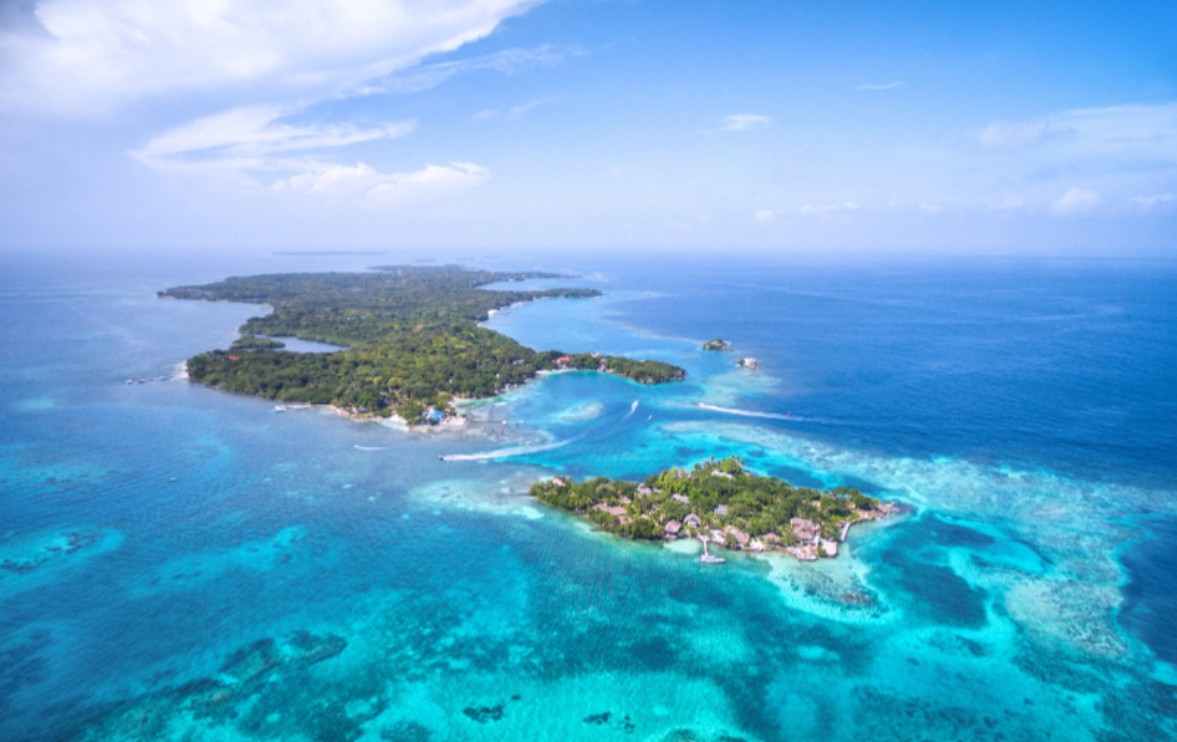
The question comes up on almost every booking call: should we go to the Rosario Islands or Barú? Both destinations are reachable in under an hour from Cartagena by private speedboat. Both are genuinely beautiful. Both are priced the same — a private boat charter from Cartagena starts at $680 for the full vessel, captain and fuel included, regardless of which way you head. And yet the experience of spending a day at each is completely different.
This guide is built for the group that has already decided they want a private boat and now needs to pick a destination. It skips the sales pitch and goes straight to the comparisons that actually matter: water clarity, activities, ride length, crowd levels, and which type of traveler gets more out of each place. If you are still on the fence, the final section covers a full-day itinerary that fits both destinations into a single charter.
The One-Line Summary for Each Destination
Before the detailed breakdown, here is the honest one-liner for each destination — the kind of summary a captain who runs this route daily would give you over WhatsApp.
Choose the Rosario Islands if: your group wants snorkeling, multiple stops, and a protected marine park. The Rosario Islands are Colombia’s closest coral reef system to a major city, and no other destination near Cartagena matches them for underwater experience. In a single day you can anchor at Cholón (the floating beach club bay), snorkel Isla Grande’s reef, visit the Natural Aquarium’s shallow starfish lagoon, and still make it to Playa Blanca for lunch. The itinerary has built-in variety that suits groups with different comfort levels in the water.
Choose Barú / Playa Blanca if: your group wants a classic beach day, fresh lobster on the sand, and a slightly shorter trip. Barú is straightforward in the best way: a long stretch of white Caribbean sand, turquoise water, palm trees, and vendors grilling lobster directly on the beach for $12–15 USD. There is no agenda beyond arriving, anchoring close to shore, and spending the day exactly as relaxed as you want. For groups with young children, couples who want to unplug, or anyone who finds a structured snorkel itinerary more exhausting than enjoyable, Barú wins every time.
Both destinations operate under the same charter price because the boat ride length is similar and Nauty 360 does not charge extra for either route. The decision is purely about what your group wants to do once you get there.
Rosario Islands vs Barú: Side-by-Side Comparison
Here are 8 criteria that matter most when choosing between the two destinations. The table is followed by an explanation of each factor.
| Factor | Rosario Islands | Barú / Playa Blanca |
|---|---|---|
| Boat ride from Cartagena | 45–60 min | 30–45 min |
| Best activity | Snorkeling, reef exploration | Beach day, swimming |
| Water clarity | Excellent (visibility 10–20 m) | Good (visibility 3–8 m) |
| Coral reef | Yes — UNESCO protected | Limited |
| Beach quality | Good (multiple beaches) | Excellent (Playa Blanca) |
| Vendors / crowds | Moderate (Cholón busy on weekends) | Busy on weekends |
| Seafood | Boat vendors at anchor | Fresh on the beach (lobster) |
| Best for | Snorkel groups, families, nature lovers | Beach lovers, relaxed groups |
Boat ride: Barú is the closer destination — Playa Blanca sits on the southern tip of the Barú Peninsula and is roughly 30–45 minutes from Club Náutico at cruising speed. The Rosario Islands are 45–60 minutes. For groups with children who get motion sick on the open water, the shorter ride to Barú is a meaningful practical advantage.
Water clarity: The Rosario Islands win clearly here. As part of a UNESCO-protected marine park, the waters around Isla Grande and the Natural Aquarium regularly show 10–20 meters of visibility during dry season (December–April) and 6–12 meters during rainy season. The water near Playa Blanca on Barú is beautiful and turquoise in color, but the reef structure is not comparable and visibility near the beach typically runs 3–8 meters.
Beach quality: This one goes to Barú. Playa Blanca is a genuinely extraordinary beach — long, wide, white sand without the volcanic rock or seagrass patches that interrupt several beaches in the Rosario Islands. If the primary goal is lying on a beautiful beach, Barú is the better destination. The Rosario Islands have good beaches (Playa del Arenal and the beach at Isla Grande are both excellent) but the sand is slightly coarser and the shoreline less dramatic.
Seafood: Fresh lobster from beach vendors at Playa Blanca is one of the authentic pleasures of the Barú day — grilled whole, priced at roughly $12–15 USD, and eaten in the shade of a palm tree. Vendors at the Rosario Islands operate from the water, paddling between anchored boats with drinks and snacks — it is a different kind of experience, more social and floating, but not the same sit-on-a-beach-and-eat-lobster ritual that Barú offers.
Crowds: Both destinations get busy on weekend mornings when the public ferries and group tours arrive. The main difference is geometry: the Rosario Islands archipelago has multiple bays, anchorages, and beaches spread across 27 islands, so crowds dilute across the system. Playa Blanca on Barú is a single beach where all traffic concentrates. A private charter that arrives before 9:30am at Barú gets the beach largely to itself; by noon on a weekend it can feel crowded despite being beautiful.
Why Choose the Rosario Islands
The Rosario Islands are the only destination near Cartagena where a private charter can offer genuine reef snorkeling in a protected marine park environment. That is not a marketing claim — it is a geographic reality. The Archipiélago del Rosario is part of Parque Nacional Natural Corales del Rosario y de San Bernardo, one of the most biodiverse coral systems in the Western Caribbean. Brain corals, staghorn, elkhorn, and plate corals are present in water as shallow as 1–2 meters, accessible without scuba equipment by any swimmer.
What makes the islands work especially well for a private charter is the variety of environments packed into a single day. In 6–8 hours you can realistically cover four distinct stops:
- Cholón bay — where dozens of private boats anchor together in the most social anchorage on the Colombian Caribbean
- Isla Grande reef — the best snorkeling in the archipelago, with 10–20m visibility and healthy coral at every depth
- Natural Aquarium — a 1–2m deep lagoon with giant starfish and juvenile reef fish, ideal for non-swimmers and children
- Playa del Arenal — a quiet, less-visited beach on the northern side that rarely appears on group tour itineraries
One detail about Cholón that most guides omit: the waters in the bay are so calm that cooking on board is genuinely practical. Several private charter groups who run the Rosario Islands route regularly bring portable grills or fully provisioned coolers and cook their own meals anchored in the bay. The flat water and consistent anchorage make it one of the few spots in the Caribbean where a full on-board meal is comfortable on a speedboat-sized vessel. For the complete breakdown of every island in the archipelago, see our complete guide to the Rosario Islands. For the best reef spots by month and swimming ability, the snorkeling in the Rosario Islands guide has all the conditions detail.
The Rosario Islands also suit groups where not everyone is at the same comfort level in the water. Non-swimmers can wade in the Natural Aquarium’s shallow lagoon while the rest of the group snorkels the deep reef at Isla Grande. Cholón works for people who want to socialize on the boat without getting in the water at all. Barú is a single-activity destination by comparison — beautiful, but if someone in your group genuinely does not enjoy beach days, there is less to offer them.
Why Choose Barú and Playa Blanca
Playa Blanca on Barú Peninsula is, by most independent measures, the most beautiful beach accessible from Cartagena. The sand is fine, white, and consistent for nearly a kilometer of shoreline. The water color at the right time of day is the same turquoise that makes Caribbean beach photography look implausible — except it is real, and you are in it. For groups whose primary goal is a genuinely great beach day, no destination near Cartagena competes.
The practical advantages of Barú compound the aesthetic ones. The boat ride is shorter — 30–45 minutes versus 45–60 for the Rosario Islands — which matters for groups with younger children or guests who prefer minimal time on the open water. The activity agenda is simple: arrive, anchor, wade ashore or stay on the boat, eat fresh lobster, swim in the shallows, nap. There is no park entry fee, and on a private Nauty 360 charter, neither does Rosario, where the park fee is not charged either. No structured snorkel itinerary to stick to, and no feeling that you are “missing” an island if you stay at the beach longer than planned.
The lobster at Playa Blanca deserves its own paragraph. Vendors set up directly on the beach with portable grills, and the lobsters are local and genuinely fresh — not the frozen variety that appears in Cartagena’s hotel restaurants. The going price is $12–15 USD per full lobster, grilled to order. For a group of 8–10 people, eating lobster on a Caribbean beach for $15 per person is one of the better value propositions in Cartagena travel. It is the kind of experience that guests consistently mention as a highlight of their trip — not the snorkeling, not the boat ride, but sitting on Playa Blanca eating a fresh-grilled lobster.
One detail that changes the calculus for some travelers: Playa Blanca is technically accessible by road from Cartagena via the Barú Peninsula, and day-trippers who take the land route spend 2–3 hours each way on rough roads, often in uncomfortable shared taxis or vans. The private boat to Barú and Playa Blanca eliminates both road transfers entirely — 35 minutes on the water versus 5–6 hours of combined land travel. That convenience is part of what makes the charter price rational even for a straightforward beach day. If this is your first trip to Colombia, our safety guide for Cartagena visitors covers neighborhoods, transport, and what to expect before you arrive.
Can You Visit Both in One Day?
Not comfortably, no. Every Nauty 360 charter runs a fixed 9:00 AM to 5:00 PM day, and the Rosario Islands and Barú sit in different directions from Cartagena, each with their own crossing time (45 to 55 minutes for Rosario, 30 to 45 minutes for Barú). Stacking both destinations into the same 8-hour window leaves barely any real time at either one once you account for two separate open-water legs plus the return. This is an itinerary trade-off, not a boat limitation: the fixed schedule is what protects the time you actually spend at your destination.
The better move is to pick one destination and give it the full day. Rosario Islands for reef snorkeling and the Cholón social scene, or Barú for a simple beach day at Playa Blanca. Both run the same $680 full-vessel rate, 9:00 AM to 5:00 PM, up to 10 passengers.
If your group genuinely wants both, book two separate charters on two different days. Each one gets the full 8 hours it deserves, at the same $680 rate per day. For a group of 10 doing both over two days, that’s $1,360 total, or $136 per person, more than a single rushed combined day, but with a real, unhurried experience at each destination instead of a 90-minute stop.
Who this matters most for: families with young children, groups that get seasick easily, and anyone who came to Cartagena to relax rather than rush between anchorages. For them, one destination per day is the right call regardless of budget.
How to Book Your Private Boat from Cartagena
Booking process is the same regardless of which destination you choose. With Nauty 360, it works in four steps:
- Decide on destination and group size. Use this guide to land on Rosario Islands, Barú, or both. Have your group size and a date ready when you message.
- Send a WhatsApp message with your date and group size. The team at Nauty 360 replies within 2 hours during business hours and confirms availability. High-season dates (December–January, Semana Santa) book 2–4 weeks in advance; most other dates are available on 24–48 hours’ notice.
- Confirm the itinerary with your captain. Let the team know which stops are priorities — the captain builds the day around your preferences and adjusts for sea conditions on the day.
- Departure from Club Náutico or Bocagrande docks. Flexible departure from 7:30am. No Muelle de los Pegasos queues — private boats leave from the hotel zone side of the city.
The charter price of $680 covers the full vessel, captain, fuel, basic snorkel equipment, and a cooler with ice. There is no separate park entry fee for either destination on a private Nauty 360 charter. Budget for beach vendor food and drinks, and a 10–15% gratuity for the captain on a full-day trip. For full vessel options and availability, see the Cartagena charter page.
Private boat from Cartagena to Rosario Islands or Barú from $680 — captain, fuel, and snorkel gear included. Up to 10 passengers. Confirmation in 2 hours.
Chat on WhatsApp — Get a Cartagena QuoteFrequently Asked Questions
Related Guides