Is Cartagena Colombia Safe? (2026 Guide)
Honest answers on safe neighborhoods, areas to avoid, boat tour safety, and practical tips from people who know the city well.
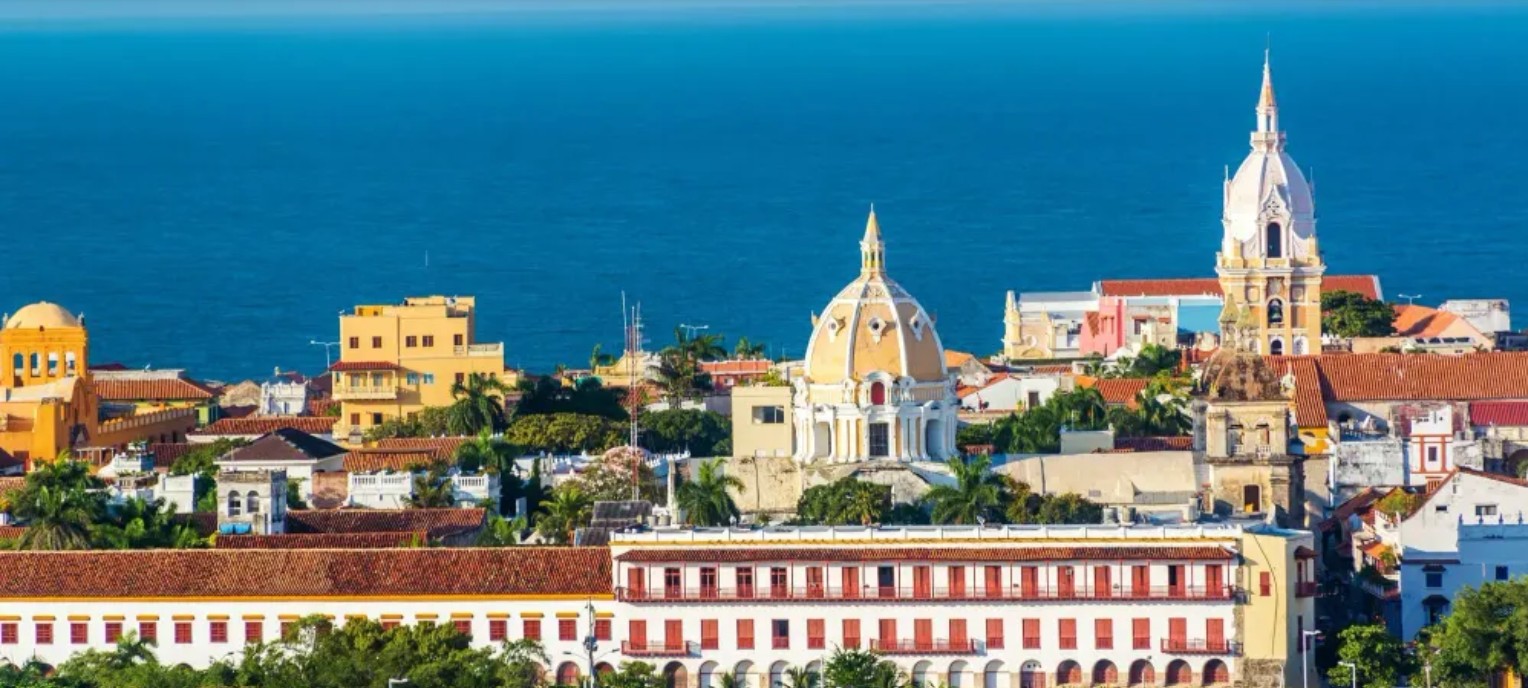
The question comes up in every Cartagena trip plan: is it actually safe? The honest answer is yes — with context. Cartagena is not Medellín in the 1990s, and it’s not the same as the Colombian interior either. It’s a Caribbean port city that has built a substantial international tourism economy over the past 20 years, and the main tourist zones reflect that investment. The city has police checkpoints at the entrances to the Walled City, tourist police patrols on the main streets, and a hospitality industry that depends on visitors feeling safe.
At the same time, Cartagena is a real city with real inequality. Neighborhoods exist five minutes from the tourist center where you should not go without a local guide — not because anything bad is likely to happen, but because you’d stand out as someone who wandered off the map, and that raises your risk profile. The difference between a smooth trip and a bad story is mostly about which streets you walk and which transport you use. This guide lays that out plainly.
Is Cartagena Safe for Tourists in 2026?
Yes — and the most direct way to contextualize that answer is with the U.S. State Department travel advisory. Colombia carries a Level 2: Exercise Increased Caution rating. That is the same level assigned to France, Germany, the United Kingdom, Spain, and Mexico. It means “be aware of your surroundings,” not “don’t go.” A Level 3 or Level 4 rating — the categories used for genuinely dangerous destinations — is not Colombia’s situation.
Cartagena specifically is Colombia’s most visited city by international tourists and consistently the first stop for first-time visitors to the country. The Colombian government has made significant investment in the tourist corridor — the Walled City alone has more visible security infrastructure than most comparable historic centers in Latin America. Uniformed tourist police (policia de turismo) operate in the main plazas and along the carriage-route streets. The bay and islands have DIMAR-certified maritime patrols covering the water routes to the Rosario Islands and Baru.
The data on incidents supports this picture. The overwhelming majority of safety problems that tourists report in Cartagena are opportunistic — a phone grabbed from a restaurant table, a wallet lifted in a crowded market, or a scam at an unofficial money exchange. Violent incidents targeting tourists in the established tourist zones are uncommon. Most travelers who visit Cartagena leave without any security incident at all. The ones who have problems typically either wandered into residential areas without guidance or made high-risk decisions — accepting rides from unmarked vehicles, carrying large amounts of cash visibly, or going alone to unfamiliar areas at 3am.
If you book your accommodation in Bocagrande or the Walled City, use Uber or InDriver for transport, and keep your itinerary in well-traveled zones, Cartagena is a straightforward destination. For private boat tours from Cartagena, the water adds another layer of safety — you’re on a registered vessel with a local captain rather than navigating streets on your own.
Safe Neighborhoods in Cartagena for Tourists
Not all of Cartagena is the same place. The tourist-facing neighborhoods are meaningfully different from the residential city that surrounds them. Here is a clear breakdown of the main zones:
| Neighborhood | Safety Level | Best For |
|---|---|---|
| Ciudad Amurallada (Walled City) | ✓ Very Safe | History, restaurants, walking |
| Bocagrande | ✓ Very Safe | Hotels, beaches, nightlife |
| El Laguito | ✓ Very Safe | Upscale hotels, quiet |
| Getsemaín | ✓ Safe (daytime & early evening) | Street art, local restaurants |
| Manga | ⚠ Use caution at night | Marina, local neighborhood |
| Nelson Mandela / La Boquilla | ⚠ Tourist areas OK, don’t wander | Beach clubs only |
Ciudad Amurallada (Walled City) is the historic core and the safest place in Cartagena for tourists. The perimeter walls create a natural boundary, and there are police checkpoints at the main vehicle entrances. The streets inside are well-lit, heavily trafficked by tourists and locals all day and into the evening, and lined with restaurants, boutiques, and colonial architecture. Walking the walls at sunset is one of the most photographed experiences in South America — and it is completely safe.
Bocagrande is the modern hotel and beach strip, roughly equivalent to Miami Beach in character if not in scale. The beachfront malecón (promenade) is safe at night for groups and well-patrolled. The main commercial streets have restaurants, supermarkets, and bars that stay open late. This is where most international hotels are located and where most package tourists stay. Petty theft on the beach is possible if you leave valuables unattended, but there is no meaningful street crime in this zone.
El Laguito is the quiet upscale peninsula at the far end of Bocagrande. It’s where some of the most expensive hotels and private residences in Cartagena are located. Very little foot traffic, very few incidents — this is about as calm as it gets.
Getsemaín is worth a specific note because its reputation is evolving fast. A decade ago it was a neighborhood that guidebooks marked as risky. Since 2018 it has undergone significant transformation: boutique hotels have moved in, the restaurant scene has become one of the best in the city, and the central plaza — Plaza de la Trinidad — runs an informal food-stall market on weekend evenings that draws a mixed local and tourist crowd. It is now entirely reasonable to spend an evening in Getsemaín. The caution is this: don’t walk alone after 2am, don’t wander more than two blocks off the main pedestrian routes, and use Uber to get back to your hotel rather than walking.
Neighborhoods and Situations to Avoid
Being honest about this is more useful than glossing over it. There are parts of Cartagena where tourists have no reason to be, and a few common mistakes that raise risk.
Bazurto Market is a large, chaotic traditional market inland from the tourist center. It’s genuinely interesting as a local experience, but it is also the place most frequently cited in pickpocket reports. If you want to see it, go with a local guide or a reliable tour — do not go alone or with expensive gear.
Nelson Mandela barrio is a residential neighborhood with no tourist infrastructure. There is no reason to be there as a visitor. If you find yourself heading in that direction because of a GPS error or bad directions, turn around.
La Boquilla has legitimate beach clubs that are perfectly fine. The issue is wandering beyond the established beach club zone into the residential village behind it. Stick to the organized beach area, get a transport pickup arranged in advance, and don’t walk the coastal road after dark.
Street taxis without identification are the single biggest practical risk in Cartagena. Unlicensed taxi operators have been involved in the majority of serious incidents reported by tourists. Use Uber, InDriver, or arrange transport through your hotel. If you must use a street taxi, confirm the rate before getting in and note the vehicle plate.
Late-night solo walking anywhere — even in the Walled City — is a risk that doesn’t need to be taken. Uber from anywhere in the tourist zone to anywhere else costs under $5 USD. There is no reason to walk alone at 2am.
Is It Safe to Take a Boat Tour in Cartagena?
This is worth addressing specifically because water tours are one of the most popular activities in Cartagena and the safety picture is quite different from navigating the city on foot.
Organized boat tours with registered operators are among the safest activities you can do in Cartagena. The bay and the route to the Rosario Islands is patrolled by Colombian maritime authority (DIMAR). Registered charter operators maintain their vessels to certification standards, carry safety equipment on board, and file departure plans before each trip. The ocean between Cartagena and the islands has no reported security incidents involving certified charters — it is a controlled maritime environment, not a street.
The distinction that matters is between registered operators and informal “lancheros” — boat operators who approach tourists at the public docks and offer cheap rides to the islands. These are not regulated in the same way. The boats may not have the required safety equipment, the routes may not be filed, and the pricing arrangements can create conflict. Booking in advance with a company that has a verifiable online presence, a real phone number, and written confirmation eliminates this risk entirely.
Private charters have an additional safety advantage: you travel only with your own group. There are no strangers on the boat. The captain is local and knows the water. For families, couples, or groups who want a controlled environment with zero unknowns, a private vessel is genuinely safer than most land alternatives. The Islas del Rosario, Pla ya Blanca, and Cholón are each calm anchorages with no security concerns whatsoever once you’re there — the challenge is just getting there safely, which a registered charter handles.
For a full itinerary of what’s reachable by boat, the private boat tour to the Rosario Islands guide covers distances, timing, and what to expect at each stop. See also the full list of Cartagena boat tour options for a comparison of destinations.
Practical Safety Tips for Visiting Cartagena
These are the concrete habits that experienced Cartagena visitors use. None of them require significant sacrifice — they’re just sensible adjustments to how you move around.
Transportation: Download Uber and InDriver before you land. Both work reliably in Cartagena. InDriver in particular is often cheaper for longer trips and lets you negotiate the fare upfront. Never get into an unmarked taxi that approaches you on the street. Airport transport should be arranged through your hotel or a pre-booked service.
Cash management: Withdraw Colombian pesos from ATMs inside shopping malls or bank branches, not from street machines. The Bocagrande Exito supermarket and the Unicentro mall both have reliable, well-lit ATMs. Carry only what you need for the day — there is no need to walk around with $200 USD in cash when most restaurants and tourist services accept cards.
Valuables and electronics: Leave expensive jewelry at the hotel safe. A mid-range smartphone is fine to use openly in the Walled City and Bocagrande. A professional camera setup attracts attention on foot in Getsemaín at night — save that for daylight tours. The rule of thumb: if losing it would ruin your trip, don’t carry it on foot after dark.
Beach safety: The beaches of Bocagrande are monitored but not guarded. If you go to the beach, either stay with your things or designate someone in your group to watch valuables. A better option for beach days is a private boat charter from Cartagena to the islands — on a vessel anchored at a remote beach, there are no other people around and no theft risk. The math also works out: splitting a $680 charter among 8–10 people is comparable to paying a Bocagrande beach club entry and renting chairs.
Drinks and social situations: Burundanga (scopolamine) exists in Cartagena, though incidents are rare in established tourist venues. The simple rule: do not accept drinks from strangers in any bar or social setting, and keep your drink in hand or covered when you’re not drinking. This applies equally in any major city worldwide.
Group cohesion: Activities that keep your group together in a defined, managed environment — a private dinner reservation, a walking tour, a boat charter — are inherently safer than splitting up in unfamiliar areas. This is less about threat level and more about practical risk management. When everyone is on the same boat, no one gets lost.
The Safest Way to See Cartagena’s Best Attractions
The paradox of Cartagena’s main tourist zones is that they are safe but often exhausting: vendors approach you constantly, the heat in the Walled City is intense by midday, taxis honk, and the most famous beaches (Bocagrande) are crowded and dirty relative to what the Caribbean can offer. The experience can feel like work.
The water is the opposite of all that. Fifteen minutes from the dock, you are at Cholón — a shallow bay with anchored boats, clear water, and floating bars. Forty-five minutes out, you are at the Islas del Rosario — white sand, turquoise water, coral reef. An hour and a half south, Playa Blanca on Barú Island delivers the Caribbean beach that most people imagined when they booked a trip to Colombia. None of these places have vendors, traffic, or the discomforts of the city. And on a private charter, your group is the only group.
“The safest way to explore Cartagena’s coast is on a private charter — your group, your route, no strangers.” That’s not marketing language; it’s a practical description of what the experience is. A private charter from Nauty 360 starts at $680 for the full vessel for up to 10 people — that’s $68 per person, captain and fuel included. Divided across a group, it costs less than most all-inclusive day tours and gives you full control of where you go and how long you stay.
For the Barú and Playa Blanca option specifically, the Barú and Playa Blanca by private boat guide covers timing, what to bring, and what to expect at the beach. And the main Cartagena charter page has current vessel availability and WhatsApp booking.
Private boat charter from Cartagena — from $680 total for your group. Captain & fuel included. DIMAR certified. Reply in 2 hours.
WhatsApp for a QuoteIs Cartagena Safe for American Tourists?
Yes — and the U.S. Department of State agrees. As of 2026, Colombia carries a Level 2: Exercise Increased Caution travel advisory, the same rating as France, Germany, the United Kingdom, Spain, Italy, and Japan. It does not carry Level 3 (Reconsider Travel) or Level 4 (Do Not Travel). The U.S. Embassy in Bogotá actively supports American citizens in Colombia and maintains an emergency contact line for U.S. citizens.
For context: Cartagena’s walled city (Ciudad Amurallada), Bocagrande, and Getsemarín are among the most tourist-trafficked areas in South America. The Colombian government has invested significantly in tourism police presence in these zones since 2015. Petty theft exists — as it does in New York, Barcelona, or Miami — but violent crime targeting tourists in the walled city is rare.
Practical comparison: Cartagena ranks safer for tourists than Medellín, Cali, and Bogotá within Colombia, and roughly comparable to other popular Caribbean beach destinations with Level 2 advisories. The main risks are opportunistic petty theft (phones, bags, cash) and scams targeting tourists, not violent crime.
The U.S. State Department specifically cites “crime” at the departmental level for Bolívar (the department containing Cartagena) — but all travel in any major tourist area of the world involves some version of this risk. Review the current advisory at travel.state.gov before your trip.
Is Cartagena Safe for Solo Female Travelers?
Thousands of solo female travelers visit Cartagena every year without incident. The walled city and Bocagrande are among the most walkable and patrolled areas in Colombia. That said, a few specific precautions make the difference between a smooth trip and a frustrating one.
Transportation
- Use InDriver, DiDi, or Cabify — never flag a taxi from the street. App-based rides show the driver’s name, photo, license plate, and route in real time. Share your trip with someone before you get in.
- Avoid unmarked tuk-tuks (mototaxis) at night — they are unregulated and not recommended for solo travelers after dark.
- Walk with confidence in the walled city during the day — tourist police patrol the main plazas around the clock.
Neighborhoods at Night
- Safe at night: Inside the walled city (Plaza de los Coches, San Pedro Claver, Calle del Arsenal), Bocagrande main boulevard, Getsemarín around Plaza de la Trinidad (busy, well-lit, tons of restaurants)
- Avoid after dark: The back streets of Getsemarín past Calle Larga, anywhere near Bazurto Market, the bus terminal area
Social Groups and Apps
Several solo female traveler communities organize meetups in Cartagena — search Facebook groups for “Solo Female Travelers Colombia” or “Cartagena Expats.” Hostels in the walled city (like Selina Cartagena) also organize group tours and social dinners. Traveling in a group for evening outings significantly reduces risk.
Bottom line: Cartagena is one of the more welcoming destinations in South America for solo female travelers. The walled city is compact and full of other tourists. Standard urban precautions — no headphones on the street, keep your phone in your bag, use app-based transport — cover 90% of the risk.
Areas to Avoid in Cartagena (Be Specific)
Most safety guides about Cartagena are vague about which areas to avoid. Here’s the specific list:
| Area | Risk level | When | Why |
|---|---|---|---|
| Bazurto Market | High risk (avoid entirely) | Day and night | Pickpocketing, crowded, no tourist infrastructure |
| Nelson Mandela / El Pozón | High risk (avoid) | Always | Peripheral neighborhoods, not tourist areas |
| Olaya Herrera | Moderate–high risk | Night especially | Adjacent to tourist areas but not patrolled |
| Muelle de los Pegasos (at night) | Moderate risk | After 8pm | Isolated dock area, poorly lit |
| Bus terminal surroundings | Moderate risk | Always | High foot traffic, pickpocket activity |
| Back streets of Getsemarín (late night) | Low–moderate risk | After midnight | Busy early evening, quieter later |
The areas above are outside the typical tourist circuit. If you stick to the walled city, Bocagrande, and the main areas of Getsemarín, you are unlikely to encounter any of these risk zones organically — you’d have to actively navigate toward them.
Is Cartagena Safe at Night?
Cartagena’s walled city at night is one of the most vibrant and safest experiences in Colombia for tourists. The streets are lit, the restaurants are packed, and tourist police patrol the main plazas continuously. The Calle del Arsenal (the nightlife street) and Plaza de los Coches are particularly busy and well-watched.
Where It’s Safe at Night
- Walled City (Ciudad Amurallada) — the main plazas, restaurants, and bars are well-lit and patrolled until 2am. The streets narrow as you go deeper in but remain generally safe in the core tourist areas.
- Bocagrande main boulevard (Avenida San Martín) — well-lit, lots of restaurants, app taxis readily available.
- Getsemarín around Plaza de la Trinidad — the neighborhood has gentrified significantly. The plaza is a social hub with murals, street food, and a mix of locals and travelers every night. Earlier evenings (7–11pm) are the safest window.
Night Safety Rules
- Keep your phone in your front pocket or a zipped bag — phone snatching from tables at outdoor restaurants does happen.
- Use InDriver or DiDi for any ride after 10pm — never a street taxi.
- Avoid walking through unlit alleys even within the walled city — stick to the main streets after midnight.
- Avoid obvious displays of expensive jewelry, cameras, or watches in less-trafficked areas at night.
Where to Stay in Cartagena (By Safety Level)
Choosing the right neighborhood in Cartagena significantly affects your safety experience. Here’s a quick breakdown:
| Neighborhood | Safety | Vibe | Best for |
|---|---|---|---|
| Walled City (Ciudad Amurallada) | ⭐⭐⭐⭐⭐ | Colonial, walkable, vibrant | First-time visitors, couples, honeymoons |
| Bocagrande | ⭐⭐⭐⭐⭐ | Beach, modern, resort-style | Families, beach lovers, longer stays |
| Getsemarín | ⭐⭐⭐⭐ | Artistic, local, street food | Budget travelers, solo travelers, creative types |
| Manga | ⭐⭐⭐⭐ | Residential, quiet, authentic | Long-stay travelers, families wanting calm |
| Laguito | ⭐⭐⭐⭐ | Upscale, quieter than Bocagrande | Luxury stays, couples |
Our recommendation for first-time visitors: Stay inside the walled city or in Bocagrande. Both are fully tourist-oriented, well-patrolled, and give you easy access to departure docks for private boat charters from Cartagena.
Getting Around Cartagena Safely
Transportation is where most preventable incidents happen in Cartagena. The solution is simple: use ride-hailing apps exclusively and avoid street taxis.
Recommended Apps
- InDriver — the most popular ride-hailing app in Cartagena. You set the fare you’re willing to pay, drivers bid on your trip. Widely used, reliable, and significantly safer than street taxis.
- DiDi — available in Cartagena since 2021, fixed prices, GPS tracking, in-app emergency button.
- Cabify — slightly more premium, good for airport transfers.
- Uber — technically operating in Cartagena but with variable availability; InDriver or DiDi tend to be faster.
Taxis from Hotels vs. Street
Taxis called through your hotel or a restaurant are generally safe — the establishment vouches for the driver. Never flag a random taxi from the street at night. The risk isn’t being robbed by the driver — it’s getting an inflated “tourist rate” fare or, in rare cases, being driven somewhere unfamiliar. App-based rides eliminate both risks.
Walking
The walled city is extremely walkable during the day. Most of Bocagrande is walkable until 10pm. After that, use an app. Avoid having your phone out while walking and looking at Google Maps — orient yourself before leaving your accommodation.
Cartagena Safety Checklist 2026
Before and during your trip, run through this list:
- ✓ Book transport in advance: use InDriver or DiDi, never street taxis at night
- ✓ Stay in the walled city or Bocagrande for maximum proximity to tourist infrastructure
- ✓ Keep valuables out of sight in crowded areas — Getsemarín market, docks, buses
- ✓ Don’t carry your passport on the street — leave it at the hotel safe, carry a photo on your phone
- ✓ Use ATMs inside banks or hotels, not standalone street ATMs
- ✓ Save the U.S. Embassy emergency number: +57 1 275-2000 (or your country’s embassy)
- ✓ Book water activities through registered operators — a catamaran tour in Cartagena or a private lancha with a DIMAR-certified captain
- ✓ Avoid unlicensed vendors at docks — only book Cartagena boat rentals through operators with written confirmations and reviews
- ✓ Keep restaurant food safety in mind: stick to cooked food at beach vendors; avoid raw shellfish from unlicensed stands
- ✓ Have travel insurance — Colombia’s tourist areas have good private healthcare, but it is expensive without coverage
Frequently Asked Questions
Yes — the walled city is one of the safest areas in Cartagena at night. Tourist police patrol the main plazas and streets continuously. The Calle del Arsenal, Plaza de los Coches, and San Pedro Claver area are busy with restaurants and bars until 1–2am. Basic precautions apply: keep your phone in your bag, use app-based transport for the return to your hotel, and stick to the well-lit main streets rather than narrow side alleys after midnight.
Yes — the Rosario Islands are very safe for tourists. The route between Cartagena and the islands is well-trafficked and monitored. The main safety consideration is choosing a registered operator with a DIMAR-certified captain rather than booking informally at the docks. Nauty 360 provides written booking confirmations with captain details for every charter. The Rosario Islands themselves are a protected national park — there is no significant crime presence in the marine park area.
Always use InDriver or DiDi over street taxis, especially at night. App-based rides show the driver’s name, photo, and license plate before you get in, and track your route in real time. Street taxis in Cartagena are not metered — fares are negotiated, and tourists consistently pay 2–4× the local rate. The apps are also faster: average wait times in the walled city are 3–5 minutes during the day and 5–10 minutes at night.
Cartagena is considered one of the safer tourist destinations in Latin America for foreign visitors. It is significantly safer for tourists than Bogotá and Medellín within Colombia, and comparable to popular beach destinations like Cancún (Mexico) and San José (Costa Rica) in terms of tourist-zone safety. The key differentiator is that Cartagena’s main tourist areas — the walled city and Bocagrande — are geographically compact and heavily patrolled, making it easier to stay within safe zones without much effort.