Tulum Private Boat Tour: Complete Guide to Charter Experiences [2026]
Every tour type, price, and what to expect — cenote snorkeling, reef stops, sunset cruises, and full-day island hopping with a dedicated captain.
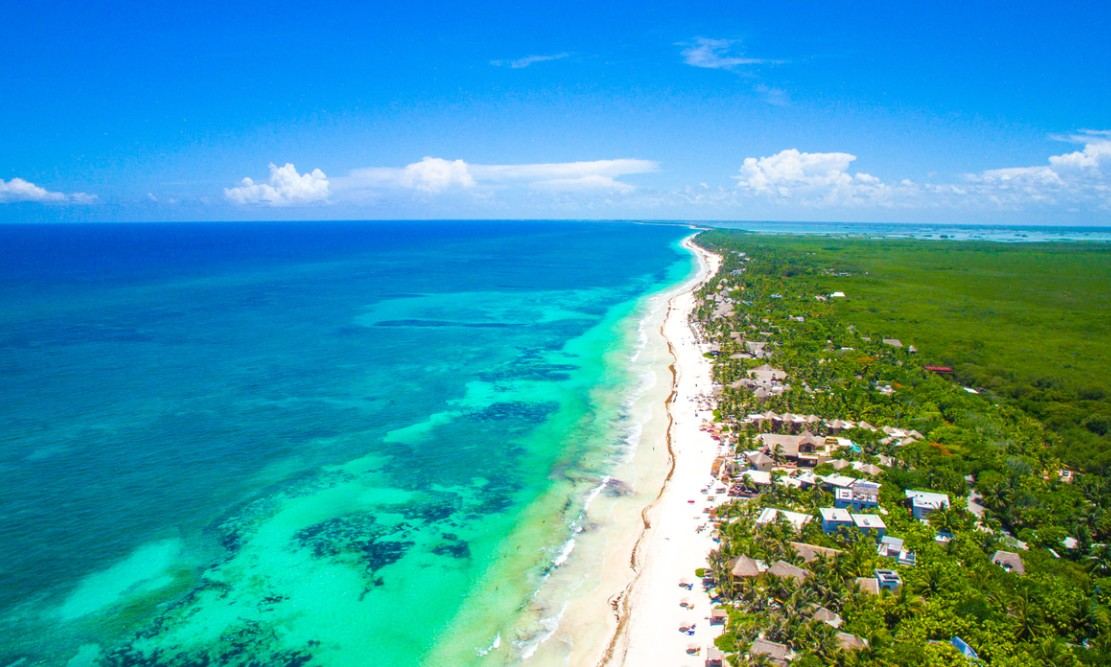
Most Tulum boat tour searches return pages of shared group departures with 20 to 40 strangers, a fixed itinerary, and a schedule set by the operator. A Tulum private boat tour works differently: the vessel is reserved for your group only. You choose the destinations, the departure time, how long you stay at each stop, and whether you want reef snorkeling, a cenote swim, a sunset cruise, or all three in a single day.
This guide covers every private boat tour experience available from Tulum’s coast in 2026: what each tour type includes, real fleet and pricing by vessel and duration, the best conditions by season, what is included versus what you pay separately, and the practical tips your captain would tell you on the way to the dock. Prices start from $1,563 per charter — captain, crew, and fuel included.
Private Boat Tour vs. Group Tour in Tulum — Key Differences
Before looking at specific tour types and prices, it helps to understand exactly what changes when you go from a shared group tour to a private charter. The difference is not just about exclusivity — it changes the practical experience at every stop on the route.
| Factor | Group Tour | Private Boat Tour |
|---|---|---|
| Who is on the boat | 20–40 strangers | Your group only |
| Route | Fixed by operator | You decide |
| Departure time | Fixed (usually 9am) | Flexible |
| Photo stops | Group pace | Your pace |
| Alcohol & music | Restricted | Your choice |
| Captain’s attention | Shared with 30+ guests | Dedicated to your group |
The private charter advantage is not only about who is on the boat — it changes the pace of every stop on the route. Your captain sets the schedule around your group, not a fixed return time shared with 30 other guests.
Private Boat Tour Experiences in Tulum
Tulum’s Caribbean coast offers a wider range of private boat tour experiences than most of the Riviera Maya. The combination of coral reef, coastal cenotes, the Sian Ka’an biosphere, and open Caribbean water gives you real variety to choose from.
Sea Cenote Tour
Some cenotes along Tulum’s Caribbean coast have openings accessible by boat from the sea side — a completely different experience from the famous inland cenotes like Gran Cenote or Dos Ojos, which require a separate land transfer. Your captain navigates directly to the sea entrance of the cenote, where you swim in from the water into crystal freshwater inside ancient limestone sinkholes.
The halocline effect — the shimmering boundary where fresh aquifer water meets salt water — is visible underwater and creates unusual dual visibility conditions. Swim through the mangrove channels into clear freshwater, a striking contrast with the saltwater you just left.
Duration: a cenote stop works as a 2–3 hour add-on to any catamaran tour, or as part of the 6-hour yacht tour. Entry fees are paid at the cenote, not included in the charter price. Best combined with: reef snorkeling on the same charter.
Mesoamerican Barrier Reef Snorkeling Tour
The second-largest coral reef system on Earth runs a short ride from Tulum’s docks. Private snorkel tours reach spots away from the crowded group-tour anchoring areas, where the reef is less disturbed and marine life is more active. What you see depends on the season and the specific reef section your captain selects, but a typical Tulum reef snorkel includes: green sea turtles feeding on seagrass beds at Akumal Bay, eagle rays gliding along the reef wall, barracuda patrolling the outer sections, moray eels in coral crevices, and numerous tropical fish species.
Best visibility conditions: December–April, when the water is clearest and sea conditions are flattest. Equipment: most private charters include basic snorkel gear; confirm mask and fin quality at booking. Duration: a 2-hour reef stop is recommended for a thorough exploration — enough time to reach the outer sections where the bigger wildlife tends to be.
Captain’s tip: A $20 USD per person dock tax applies to all Tulum charters, paid directly at the marina the day of departure. It is not included in the published tour price. Bring small bills.
Sunset Private Cruise
Any of the short catamaran tours can be booked with a late-afternoon departure for a sunset-timed charter. The route follows the Riviera Maya coastline offshore, with the Tulum ruins visible on the cliff as you leave the dock, before moving into open Caribbean water for the sunset itself.
The Caribbean sky west of Tulum turns gold and pink in layers before the drop. On a private boat with your own group, you control the music and whether you stop swimming to watch the sun go down or stay in the water until the last moment. Popular for: marriage proposals, anniversaries, bachelorette parties, and corporate events. Catering, an open bar, a photographer, or decoration can be coordinated through an outside vendor after you book, priced separately. The 3-hour Catamaran Lagoon 38’ starts from $1,563, up to 15 people.
Private Boat Tour Prices in Tulum (2026)
All prices below are per vessel, not per person. Captain, crew, and fuel are included. A $20 USD per person dock tax applies separately, paid at the marina on departure day.
6-Hour Yacht Tour — Marina Puerto Aventuras
| Vessel | Capacity | Price |
|---|---|---|
| Yacht Sea Ray 40’ | 12 pax | From $3,000 |
| Yacht Azimut 42’ | 15 pax | From $3,125 |
| Yacht Azimut 50’ | 20 pax | From $3,250 (+$163/pax 16–20) |
Short Catamaran Tours (3h / 4h / 5h)
| Vessel | Capacity | 3h | 4h | 5h |
|---|---|---|---|---|
| Catamaran Lagoon 38’ | 15 pax | $1,563 | $1,875 | $2,188 |
| Catamaran Leopard 40’ | 20 pax | $1,688 (+$100/pax 16–20) | $2,125 (+$125/pax 16–20) | $2,563 (+$150/pax 16–20) |
| Catamaran Leopard 44’ | 35 pax | $1,938 (+$113/pax 16–35) | $2,438 (+$125/pax 16–35) | $2,813 (+$150/pax 16–35) |
| Catamaran Custom 65’ | 100 pax | $5,250 (+$88/pax 51–100) | $5,250 (+$88/pax 51–100) | $6,500 (+$100/pax 51–100) |
For the complete breakdown of all Tulum rental configurations and vessel types, see the Tulum yacht rental prices guide.
What’s Included in a Private Boat Tour
Every Tulum charter — catamaran or yacht — includes the same core:
- Full crew — fully dedicated to your group for the entire duration
- Fuel for the full agreed route
- Sound system
- Towels
- Snorkel gear — masks, fins, and vests
Available on request, not included by default: fishing gear, paddleboard, and flotation devices.
Catering, an open bar, decoration, and a photographer are genuinely available for these tours — but they are coordinated through an outside vendor after you book, and priced separately. There is no published price for these because they depend on your group size and what you choose.
Not included — bring cash: cenote entrance fees (paid on-site, amount confirmed at booking) and a $20 USD per person dock tax, both not included in the charter price.
Best Conditions for a Private Boat Tour in Tulum by Season
The Caribbean side of the Yucatan Peninsula has predictable seasonal patterns that directly affect sea conditions, reef visibility, and marine wildlife encounters. Here is the honest breakdown by month:
December–April (peak season): The absolute best window. Flat Caribbean Sea and excellent reef visibility. January–March is the flattest period of the year and the most reliable for the 6-hour yacht tour.
May–June (shoulder season): Good conditions overall. Occasional afternoon showers are brief. Fewer tourists means quieter snorkel sites, and reef visibility remains excellent.
July–August (school holiday peak): Busy. Sea conditions are slightly choppier in the afternoons as east winds build. Morning departures (7–8am) remain excellent. Snorkel sites are more crowded with group tours, which reinforces the advantage of a private charter that can reach sites before the main flotilla arrives.
September–October (hurricane season): The risk window. Offshore tours are not recommended as a primary plan — operators may pause schedules when tropical systems are active. If you are visiting during this period, build flexibility into your itinerary and confirm closer to your departure date.
November (transition month): An underrated window. Weather improving rapidly, fewer crowds, good reef visibility. Groups who can time their trip to mid-November often get the best combination of conditions and lighter crowds.
Timing within the day: Depart early — 7–8am — for flattest sea conditions and best reef visibility. Wind picks up on most Caribbean afternoons. The first snorkel stop should always happen before 10am. After that, group tour boats arrive at every major site simultaneously. This is not about avoiding crowds as a luxury preference — it materially affects wildlife encounters: turtles and reef fish behave differently with fewer people in the water at once.
Day-of Tips for Your Private Boat Tour
These are the practical details your captain would go over at the dock, presented here so you arrive prepared and nothing is a surprise:
- Arrive 15–20 minutes before departure. Your captain uses this time to run through the route, brief the group on protected-zone rules, confirm headcount, and check gear sizes. Arriving on time means a full briefing; arriving late means a shorter one.
- Wear reef-safe sunscreen. Chemical sunscreen — any product containing oxybenzone or octinoxate — is not allowed in Tulum’s protected marine areas, including Akumal Bay, Yal-Ku Lagoon, and stops within the Sian Ka’an biosphere. Mineral SPF 30+ or higher is the standard. If you arrive without it, the captain typically carries reef-safe sunscreen on board.
- Bring cash for on-site fees. Cenote entry and the $20/person dock tax (paid at the marina before departure) are cash — no card machines at sea stops or the marina. Small bills preferred.
- Wear water shoes or go barefoot on deck. Flip-flops are a slip hazard on wet fiberglass decks, especially when the boat is moving at speed. Water shoes with a grip sole or going barefoot are both safer options.
- Bring a dry bag for valuables. Wave splash is common on speedboats, especially in the first 15 minutes of transit when the captain is bringing the boat up to cruising speed. Phone, wallet, and sunglasses belong in a dry bag, not a regular backpack.
- Let the captain know about non-swimmers before departure. The captain can adjust the route and snorkel briefing, and can position the anchor to create a calm entry area with a rope line for guests who want to stay near the boat.
- Confirm your departure dock the night before. All Tulum charters depart from Marina Puerto Aventuras. Confirm your specific pickup location and dock slip with the operator the evening before, not the morning of.
Ready to book your Tulum private boat tour?
Tell us your date, group size, and the experiences that interest you most — cenotes, reef snorkeling, sunset, or a full-day route. We confirm availability within 2 hours and the captain designs the itinerary around your priorities.
💬 WhatsApp: +1 954 890 0266