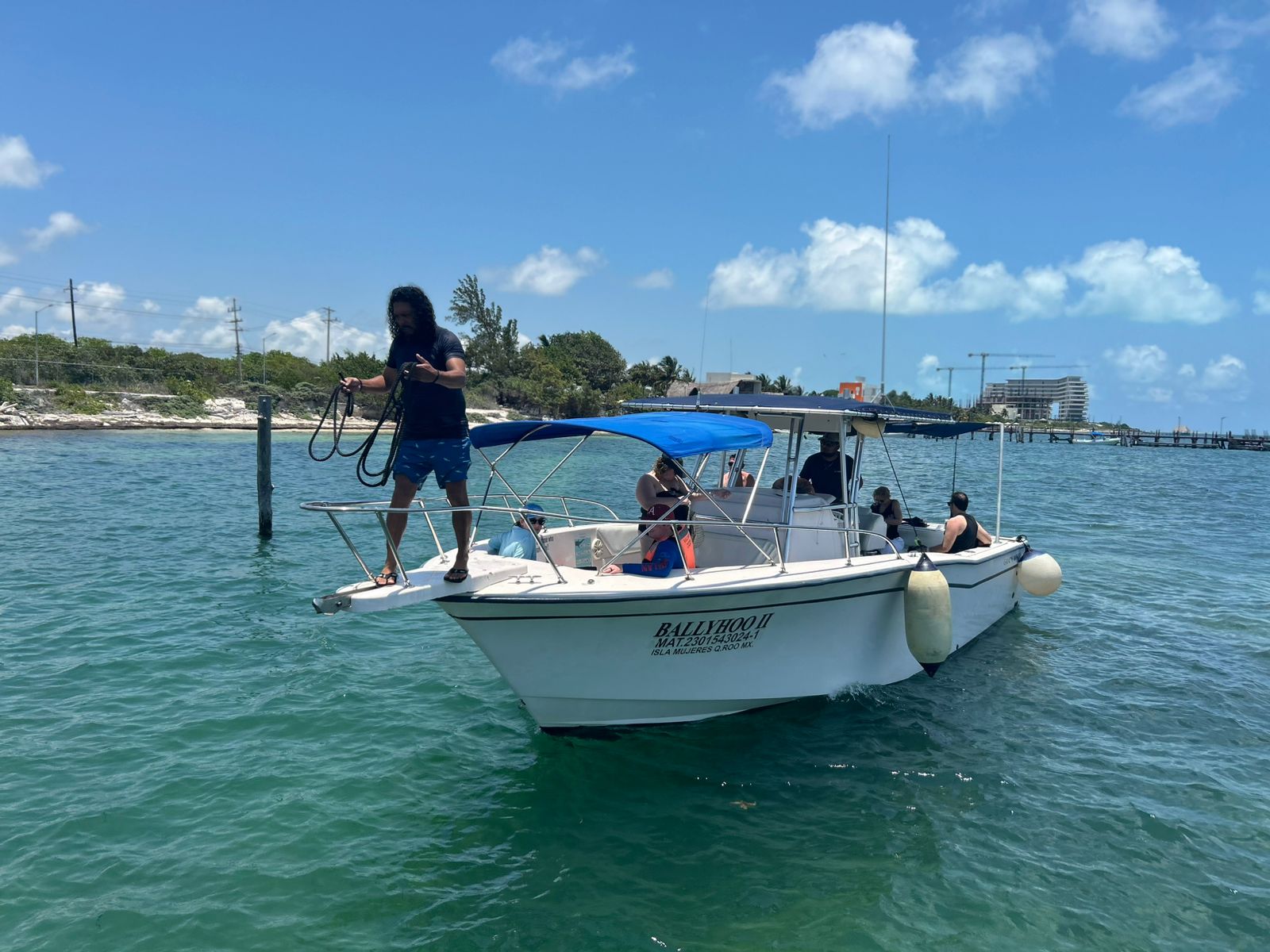
Quick answer: Whale shark season in Cancún officially runs May through September, regulated by Mexico's CONANP agency. July weeks 2–3 and the first week of August deliver the highest sighting density. Early September offers nearly the same density with 40% fewer boats on the water.
You found the right page. Most "whale shark season" articles online recycle the same vague answer — "June through September" — without telling you which exact weeks produce the best encounters, why the exact season dates shift from year to year, or why booking in August feels suddenly impossible. This guide breaks down the season month by month, explains the CONANP permit system that controls access, and tells you when to book to actually secure a spot.
The short version: if you want the highest sighting density with the most manageable crowds, book the first two weeks of September. If you want the absolute peak density and you're willing to compete for permit slots, aim for mid-July. Either way, you need to plan further in advance than you think.
The Official Whale Shark Season in Cancún: Dates & Window
Mexico's CONANP (Comisión Nacional de Áreas Naturales Protegidas) sets the official whale shark season each year, typically opening in May and closing in September, with exact dates confirmed annually. Outside the season, no operator can legally take you out to swim with whale sharks in the designated feeding zones near Isla Contoy and Isla Holbox.
The season window is set by CONANP as a species-protection measure — outside the season, taking tours out to encounter whale sharks near the Yucatán Peninsula is not legally permitted, regardless of whether sharks are present in the water. Whale sharks do follow plankton blooms that build in the warm Caribbean waters north of the peninsula each summer, with concentration typically peaking around mid-June and thinning out by mid-September — which is part of why the best weeks fall in the middle of the season rather than at its edges, not why the season opens or closes when it does. CONANP reviews the exact dates annually based on marine biologist reports, so always confirm the current dates with your operator before booking.
For Nauty 360 Cancún operations, the certified departure marina varies by day, with the feeding grounds in the waters near Isla Mujeres. Travel time to the feeding grounds is 90–120 minutes from Cancún, depending on where sharks are concentrated that morning. Hotel pickup is 6:00–7:00 AM, the boat's real departure from the marina is 7:00–7:30 AM, and you'll be back at your hotel by approximately 2:00 PM.
The whale shark season officially opens in May and runs through September, with exact dates set annually. If you're planning an early- or late-season trip, confirm with your operator that permits are in place for your exact dates before you book flights.
Month-by-Month Sighting Density: When to Go for Best Results
June
Activity in June remains moderate. Whale sharks are present but the aggregations are smaller — typically 10–30 individuals versus the 100+ seen at peak. Sighting activity is lighter than peak season. The upside: significantly fewer boats, cooler mornings, and operators eager for business. If your schedule locks you into June, the second half of the month is meaningfully better than the first few days.
July: Peak Density
July is the heart of the season. Plankton blooms reach maximum concentration and whale shark aggregations grow accordingly. Weeks 2 and 3 of July (roughly July 7–21) historically produce the largest aggregations — multiple encounters per charter are standard rather than exceptional. The trade-off is boat traffic: this is when the most operators are running tours simultaneously, and the feeding zones can feel crowded. A private charter matters most in July — you control your approach, your time in the water, and how close you get.
August: High Season Pressure
Sighting density remains very high in August, comparable to late July. The first week of August is particularly strong. However, August is peak vacation season for both Mexican and international travelers, meaning maximum competition for permit slots and maximum boat traffic at the feeding grounds. Book August dates 3–4 weeks out or accept real risk of missing availability entirely.
September: The Insider Window
Here is where local captains and repeat visitors quietly book. The first half of September maintains high whale shark density — the plankton bloom hasn't fully dissipated — but the number of active boats drops by roughly 40% compared to August. School has started in the US and Mexico, families have gone home, and the feeding grounds feel notably quieter. The one real risk is weather: early September sits inside the active Atlantic hurricane season. Book a charter with a clear cancellation policy tied to weather conditions, not just a credit toward a future date.
The Best Week to Book a Whale Shark Tour in Cancún
If you can choose freely: early September. Sighting density is nearly identical to July peak, boat competition is roughly half, and rates from some operators reflect lower demand. You get more space in the water, more flexibility from your captain to follow an individual shark, and a less chaotic experience overall.
If September doesn't work for your schedule: July 7–14 gives you the highest statistical chance of a large aggregation encounter. Accept that you will share the feeding zone with other boats and plan your booking at least 3 weeks ahead.
What you should avoid: the final days before the season closes carry some risk of the season ending early if CONANP observes migration beginning. It rarely happens, but it has happened. If you're booking a trip late in September, confirm with your operator that they have a weather and season-close policy.
How Far in Advance Should You Book? (The CONANP Permit Problem)
CONANP allocates a limited number of daily permits per zone — each authorizing one boat and a maximum of 8 swimmers at a time. Operators must request their permit allocation 2–3 weeks before the tour date. During weeks 2–3 of July, permit slots regularly reach zero by mid-June. An operator without secured permits cannot run a legal tour, period.
The booking timeline by month:
- June: 1–2 weeks advance is generally sufficient.
- Early July (July 1–14): Book 3–4 weeks out. Slots fill fast.
- Mid-to-late July and August: Book 3–5 weeks out minimum.
- Early September: 1–2 weeks is usually enough.
When you book a private whale shark charter in Cancún with Nauty 360, the CONANP permit is handled for you and included in the charter price.
What to Expect on a Private Whale Shark Charter from Cancún
A private whale shark charter is a fundamentally different product from the shared group tours you'll see advertised at $80–$120 per person. Here's what the private experience looks like and why the price difference is justified.
What's Included at $2,500
The from-$2,500 charter price includes four things that are either mandatory or essential:
Full price breakdown: from $2,500 per boat, up to 10 people — the full price, no add-ons.
- CONANP permit: Required by Mexican law. An operator running without this permit is operating illegally and exposing you to a tour that can be stopped by marine enforcement at any time. The permit cost is built into the charter — you are not charged separately.
- Bilingual certified captain: Your captain holds Mexican maritime certification and speaks English. This matters in practice: real-time briefings on shark behavior, communication on when it's safe to enter the water, and coordinating your in-water time are all done in the language you actually understand.
- Snorkel gear: Mask, fins, and snorkel for your group. Rash guards are available on request. You don't need to bring your own unless you have specific preferences.
- 100% private boat: No shared departures, no strangers in your group. You control the pace, the number of in-water sessions, and whether to extend your time at the feeding grounds or return early.
This is a specialized wildlife tour, not a standard leisure charter. The CONANP permit, the early departure logistics, the captain's expertise in locating and approaching whale sharks ethically — these are what make the price distinct from a standard day-on-the-water boat rental. For more on what the experience feels like once you're in the water, read our full guide on what to expect on the water.
Whale shark season is open now. Limited CONANP permit slots available for July and August — tell us your dates and group size and we'll confirm availability within 2 hours.
WhatsApp Us for Availability