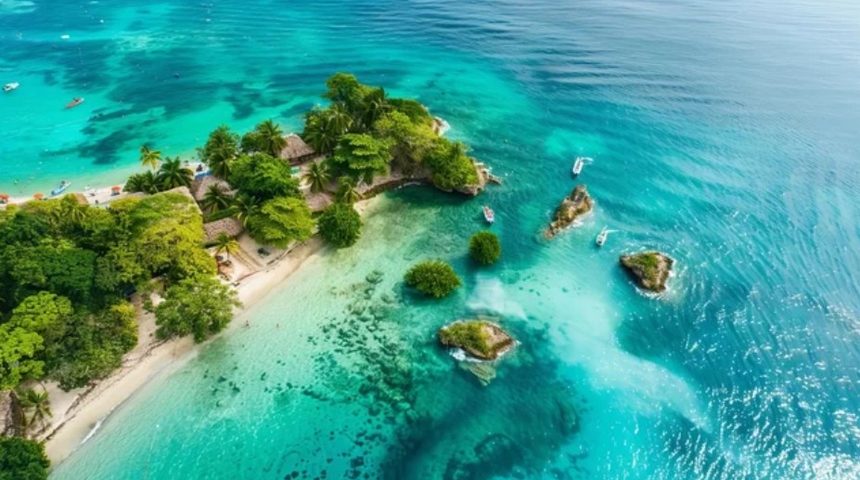
Most visitors to Cartagena discover the Rosario Islands and stop there. The Rosario are stunning and easily reachable — 35 km offshore, dozens of operators, and a well-worn route that any captain can run. But there is another archipelago further out that almost nobody on a shared tour will ever reach: the Islas de San Bernardo, sitting 90 km southwest of Cartagena in waters that are noticeably quieter, more transparent, and less trampled.
Getting there takes longer and costs more than a standard Rosario charter. This guide explains what is involved, what you will find, and how the numbers break down.
What Are the San Bernardo Islands and Why Are They Different from Rosario?
The Archipielago de San Bernardo is a group of ten small coral islands protected under Colombia's national park system. Located in the Gulf of Morrosquillo, they sit far enough from the main tourist circuits that a typical weekday brings just a handful of visiting boats — a stark contrast to the Rosario Islands, which can see dozens of shared-tour lanchas anchored at the same reef by 10 AM.
Water visibility regularly exceeds 20 meters in the dry season, and the reef system is considered more pristine than Rosario's precisely because fewer visitors reach it. The standout stop is Isla Mucura, the only inhabited island in the archipelago accessible by fast lancha in a single day from Cartagena. Its main settlement, Punta Arenas, is a small fishing community with restaurants serving freshly caught lobster, hammocks suspended over the water, and cold coconut water sold directly from residents — no hotel chain, no entrance kiosk, no tourist menus.
How to Get to the San Bernardo Islands by Private Boat from Cartagena
The crossing to San Bernardo is 90 km of open Caribbean water — more than twice the distance to the Rosario Islands. It's a longer, more expensive charter for that reason alone, which is likely why it doesn't appear on most shared-tour menus built around the shorter Rosario run.
Captains who run this crossing regularly know the wind patterns and navigational marks that matter for the open-water leg.
This runs on the same Full Day charter as any other Cartagena destination — departure at 9:00 AM, return by 5:00 PM. With a 2h15 crossing each way, that leaves about 3.5 hours on the islands. See the full context of Cartagena private boat charters for vessel options.
What to Do Once You Arrive: Isla Mucura, Tintipan and the Reef
A day trip realistically covers two or three stops. The standard itinerary: outer reef snorkeling, beach anchor at Isla Tintipan, lunch at Punta Arenas on Isla Mucura.
Outer reef snorkeling: The reef between Isla Panda and Isla Cayo Bolivar is the most intact in the archipelago — parrotfish, angelfish, and nurse sharks under ledges. One non-negotiable: mineral sunscreen only. Chemical sunscreen is prohibited under INVEMAR and Parques Nacionales regulations, enforced at the marine checkpoint. Bring your own — nothing is sold on the islands.
Isla Tintipan: Quiet white-sand crescent, shallow turquoise water, no facilities. Almost no other visitors on a weekday.
Punta Arenas, Isla Mucura: Grilled lobster and fried fish ordered direct from the kitchen — $15 to $25 USD per person. Hammocks over the water at no charge. For larger groups, a catamaran charter is the right vessel: twin-hull stability cuts fatigue on the crossing and provides shaded deck space for everyone.
Cost Breakdown: Private Boat vs. the "San Bernardo Day Tour" Trap
Shared-boat options advertised at $80 to $120 per person for "San Bernardo tours" typically depart from Tolu or Covenas — towns 3 to 4 hours from Cartagena by road. They are not day trips from Cartagena.
A legitimate private charter departing from Cartagena starts at $1,360 with Nauty 360, captain, fuel and ice included — exactly double the $680 Rosario charter from the same port, because the crossing is more than double the distance and consumes roughly twice the fuel.
For groups of 8 or more the per-person cost drops to $170 or less — comparable to a shared Rosario tour, for a far less crowded experience on a more intact reef.
Best Time to Go and What to Pack
December through April is the optimal window: lighter morning wind and underwater visibility peaking at 20 to 25 meters. January and February are the most reliable months. The wet season (May through November) is not a blanket prohibition — morning departures in June and July often find workable conditions — but August through October brings the highest variability. A captain experienced on this route will make the call on the morning of departure; book wet-season trips with that flexibility built in.
What to pack for this specific trip:
- Mineral sunscreen, SPF 50+ — buy it before you arrive in Cartagena. Pharmacies stock it inconsistently and the islands have none.
- Cash in small bills — for lunch at Punta Arenas (about $15 to $25 per person, see cost breakdown above) and anything else you buy on the islands. No card readers there.
- Motion sickness medication — take it one hour before departure. The 2h15 open-water crossing is more exposed than a Rosario trip.
- Dry bag — for phone and camera. The crossing can be wet at cruising speed through swells.
- Light rash guard or linen shirt — wind at sea feels cooler than shore temperature and doubles as sun protection.
Departure logistics mirror other Cartagena private island charters: confirm the marina point the night before, arrive 20 minutes early, and have your group ready — the departure window is not flexible on a trip of this distance.
San Bernardo or Rosario: Which Should You Choose?
Go to the Rosario Islands first if this is your first time in Cartagena. Cholón, Isla Grande's reef, and the Natural Aquarium make a genuinely great day that works for almost any group. Come back to San Bernardo when you want to go further and find something that most Cartagena visitors will never see.